Plixer Endpoint Analytics
Plixer Endpoint Analytics delivers real-time visibility into every endpoint, device, and IoT device connected to your network.
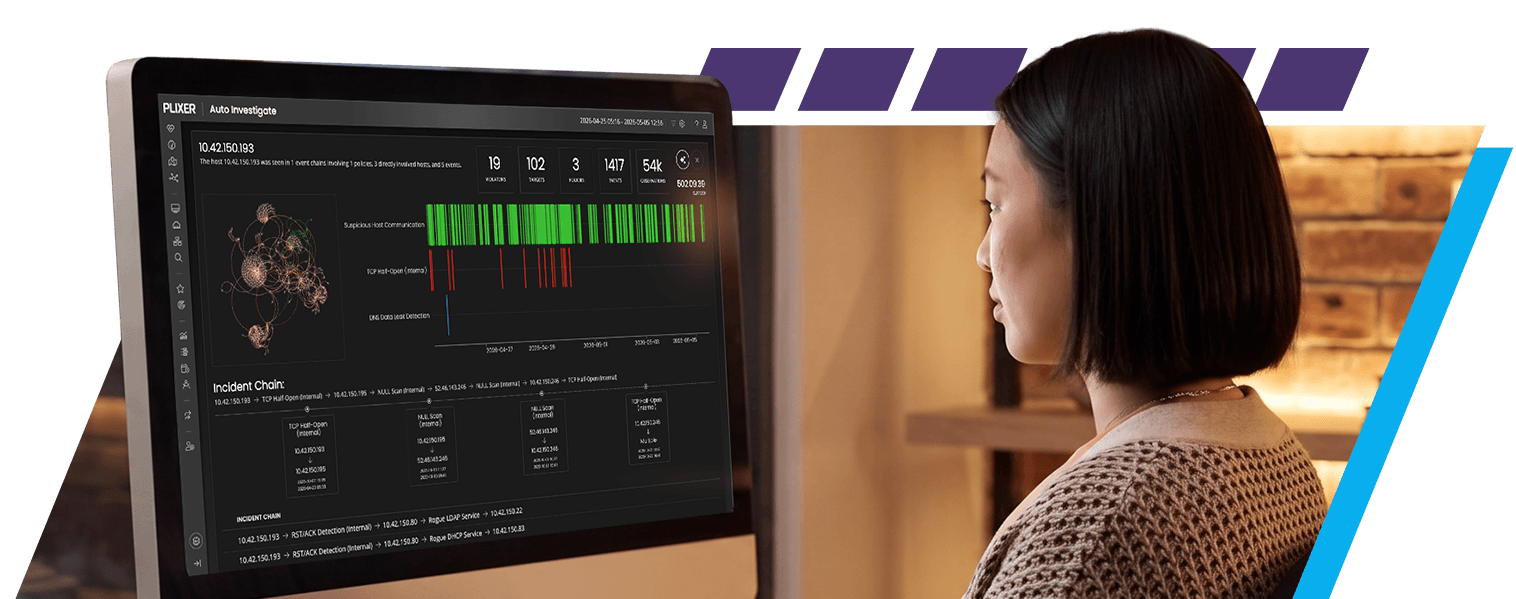
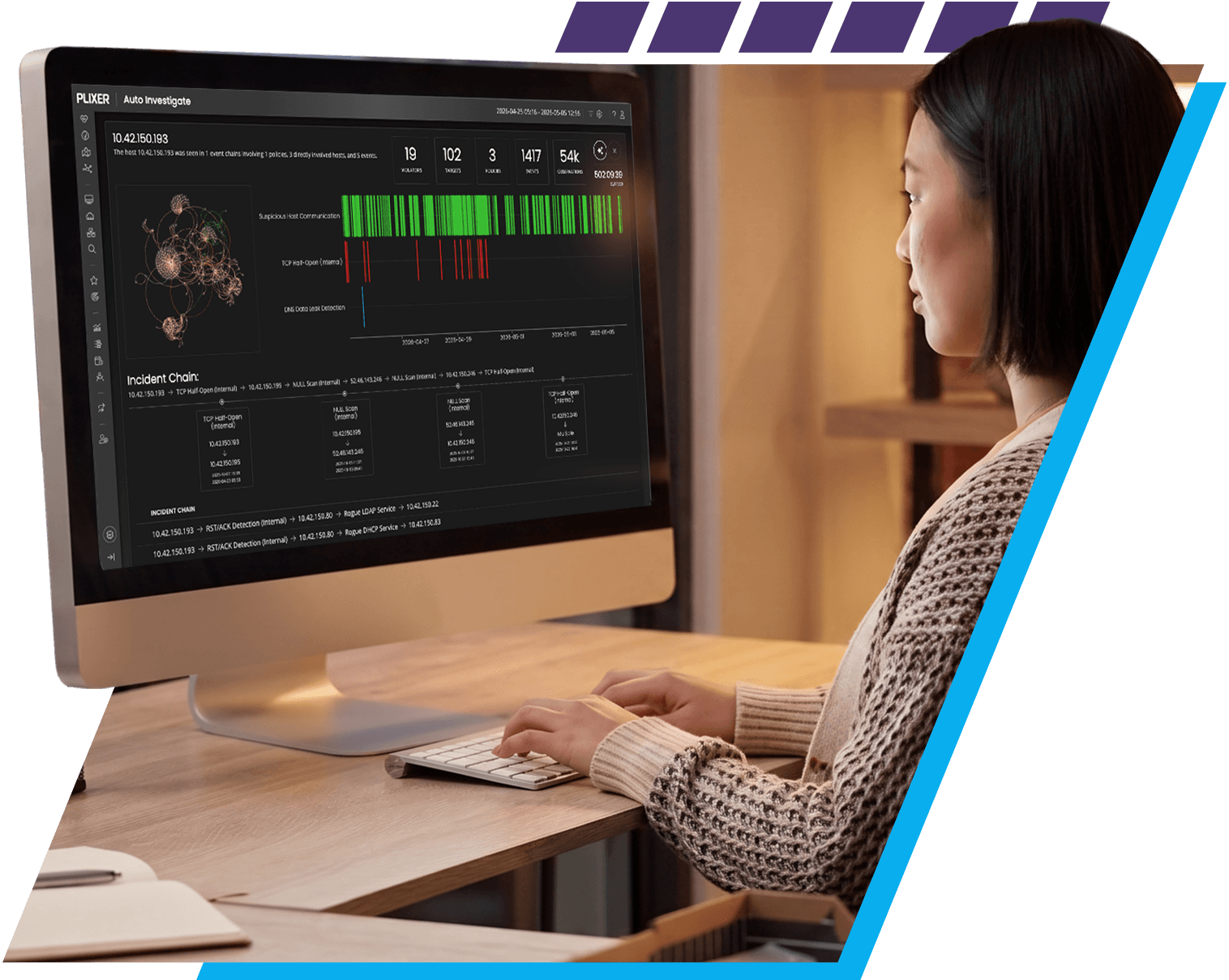
Using identity-driven analytics, the system continuously observes device behavior and network activity to help security teams and NetOps understand what’s connected, where it is, and how it behaves.
Schedule a Demo
Improve Detection, Response, and Operational Confidence
Modern networks are saturated with unmanaged devices. Traditional endpoint monitoring tools and manual asset tracking often fail to keep identities, locations, and behaviors current. This creates blind spots that affect network security and threat detection.
Plixer Endpoint Analytics addresses these challenges with continuous profiling, identity enrichment, and real-time monitoring. The result is a defensible, always-current view of endpoint devices, without agents and without disruption to managed devices across the enterprise.
Identity-driven analytics and anomaly detection help surface rogue devices, risky changes, and suspicious activity. Alerts tied to endpoint behavior and history improve response time and strengthen endpoint security practices.
Plixer Endpoint Analytics tracks identity, MAC-to-IP history, location, and asset timelines over time, giving teams the context needed for investigations, compliance, and operational decisions.
Endpoint Analytics uses passive and active telemetry sources to scale across tens of thousands of endpoints. Deployment avoids endpoint disruption while enabling continuous endpoint monitoring and device performance visibility.

Plixer Capabilities That Support Endpoint Intelligence
Plixer Endpoint Analytics uses a field-tested library of predefined profiles to classify devices with per-endpoint match scoring. The system continuously re-models endpoints as attributes change across DHCP, RADIUS, SNMP, and observed traffic. Profiles and profile groups are centrally managed and can be enabled or disabled as needed to maintain consistent visibility.
The system generates real-time events for profile changes, location moves, duplicate MAC addresses, and other behavioral shifts. Each alert connects to a full endpoint event history for investigation and response.
Endpoint identities are enriched using Active Directory (LDAP/LDAPS) and RADIUS usernames and accounting data. DNS zone transfers and naming mappings provide additional context, while MAC-to-IP discovery pulls from multiple sources. Network graph visibility is supported through SNMP discovery, CDP/LLDP, ARP, and traps for location awareness, with VLAN discovery at both the device and port level.
Risk scoring can incorporate data from Tenable and Microsoft Defender, providing added context for security decision-making. Supported actions within Plixer Endpoint Analytics include isolating or scanning devices through Defender API integrations.
Endpoint Analytics observes SPAN or local traffic and can receive IP Helper–forwarded data. NetFlow and sFlow ingestion supplement identity and behavior visibility to support continuous monitoring and analysis.
Architecture Built for Scale, Visibility, and Explainability
Plixer Endpoint Analytics is designed to deliver continuous endpoint visibility through a scalable architecture that combines passive data capture, active polling, and identity-driven profiling.
Endpoint Analytics can be deployed as a rack-mount appliance or a VMware OVA, depending on infrastructure needs. Management is centralized through a single web interface, allowing teams to monitor devices, investigate activity, and review endpoint context from one place.
The solution observes SPAN or IP Helper traffic where available and collects SNMP (including traps), DHCP, RADIUS accounting, and optional NetFlow or sFlow data. Active Directory and DNS zone data enrich endpoint identities, improving correlation between devices, users, and network behavior.
The Endpoint Profiling Engine assigns each discovered device to a best-fit profile and continuously re-models it as behavior or attributes change. This supports accurate classification, anomaly detection, and continuous monitoring of endpoint activity.
A PostgreSQL-backed repository stores device data and powers asset pages that display profile match scores, risk context, asset timelines, and historical activity. Teams can review endpoint history and communications to support investigation and response.
The separation of passive capture (SPAN, flows, IP Helper), active polling (SNMP, RADIUS, AD, DNS), and profiling enables large-scale deployment without agents. Findings remain explainable within the UI, allowing teams to understand how identities, behaviors, and risks are determined.
Plixer Endpoint Analytics for NetOps Teams
Endpoint Analytics helps NetOps teams maintain accurate device visibility, track infrastructure changes, and understand how endpoints move and behave across the network.
NetOps teams maintain an always-current view of endpoint devices, including identity, OS, VLAN, and location. MAC-to-IP history and asset timelines make it possible to quickly determine what a device is and where it has been across the network.
Endpoint Analytics generates events when endpoints migrate, ports change, or infrastructure configurations shift. These insights support accurate tracking of device movement and help teams validate operational changes.
Continuous collection of DHCP and RADIUS telemetry maintains MAC-to-IP bindings, usernames, and location data. This reduces the time required to trace users or devices and improves overall network visibility.
Plixer Endpoint Analytics for SecOps Teams
With Plixer Endpoint Analytics, SecOps teams get the context needed to detect suspicious devices, assess risk, and investigate activity with confidence.
Continuous monitoring identifies unrecognized MAC addresses, duplicate identities, and profile mismatches. These events allow security teams to triage unknown or suspicious endpoints quickly.
Endpoint context combines identity, behavior, and enrichment data to surface risk signals tied to specific devices. This visibility helps security teams prioritize actions and investigate potential threats.
Every finding is tied to an endpoint timeline, communications activity, and historical behavior. This provides defensible context for investigations, response actions, and compliance requirements.
Gain Real-Time Endpoint Visibility and Monitoring
Understand what’s on your network, where it is, and how it behaves.
Plixer Endpoint Analytics helps security teams and network teams strengthen endpoint monitoring, improve threat detection, and maintain continuous device awareness.
Explore how identity-driven analytics can improve network security and operational visibility across your enterprise.
Request a Demo
FAQs
Endpoint analytics provides continuous visibility into every device connected to the network so teams can understand identity, location, and behavior in real time. Its purpose is to reduce blind spots, support stronger endpoint security and network operations, and provide a reliable source of truth for asset tracking, risk awareness, and investigations.
Endpoint analytics observes network traffic and device signals, then enriches that data with identity and infrastructure context such as Active Directory, DNS, DHCP, and RADIUS. A profiling engine classifies each endpoint, tracks changes over time, and generates alerts when behavior, identity, or location shifts. This creates a continuously updated inventory supported by monitoring, telemetry, and asset timelines.
Endpoint analytics improves visibility across managed and unmanaged devices, strengthens threat detection, and provides historical context for faster investigation. It helps teams maintain accurate device identity, monitor changes in real time, and respond more confidently using enriched data and explainable endpoint histories.
Endpoint analytics is most effective in enterprise environments with large, dynamic networks and a mix of managed, unmanaged, and IoT devices. It supports both network operations and security operations by improving asset inventory, monitoring infrastructure changes, detecting rogue devices, and providing context for response and compliance workflows.